A test station that measures a humanoid's wear
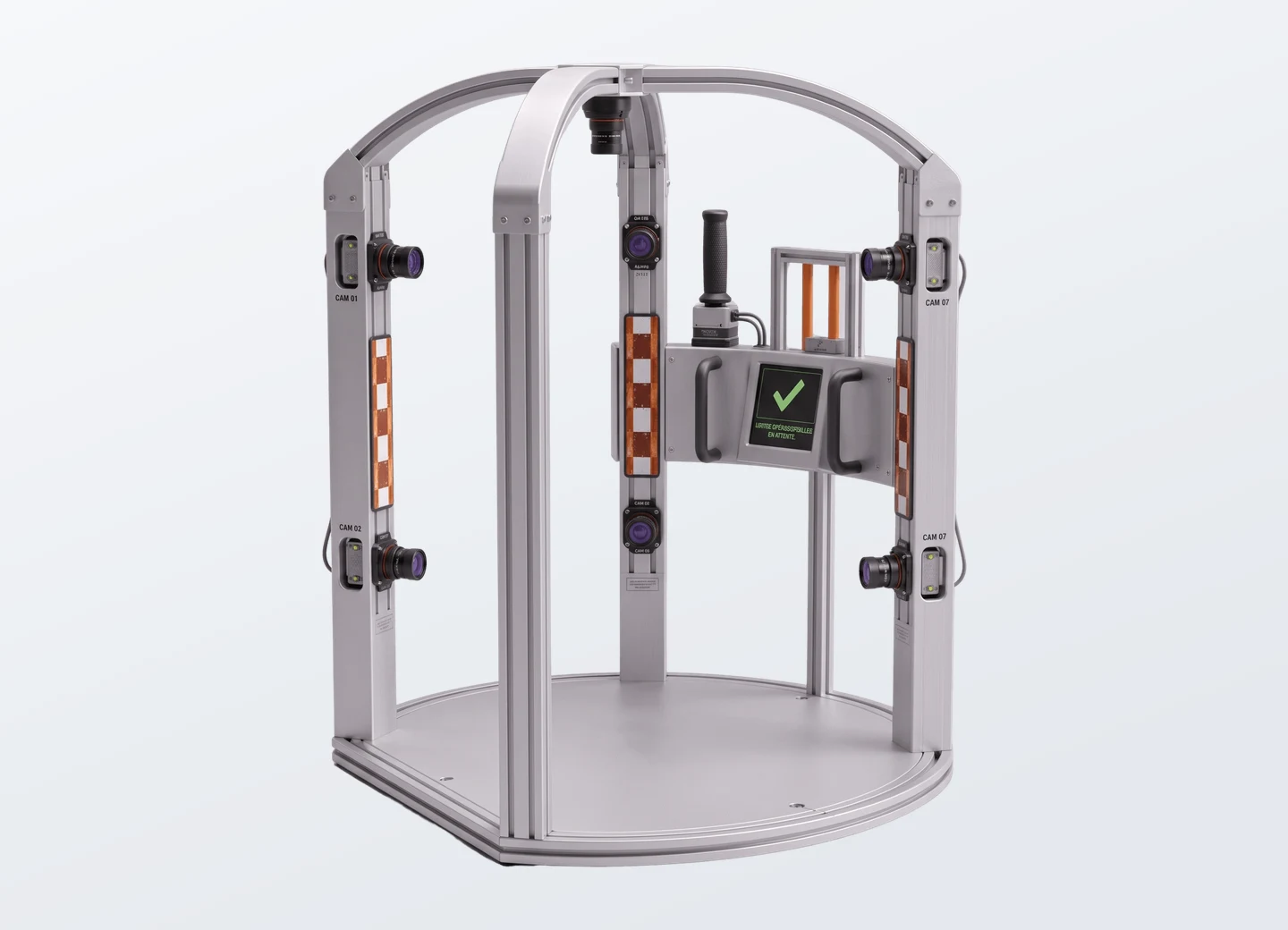
WebsiteA test station installed on the operator's site. One 15-minute pass per humanoid measures the mechanical wear that the robot's own AI compensates for and hides.
What it is
A humanoid robot is certified once, when it is designed. After that, nobody outside the company that sold it measures it again. AIH Global provides that outside measurement, with a station on the operator's own floor that runs one pass per robot against a calibrated reference.
Behind the fence, and without it
Why it needs a station
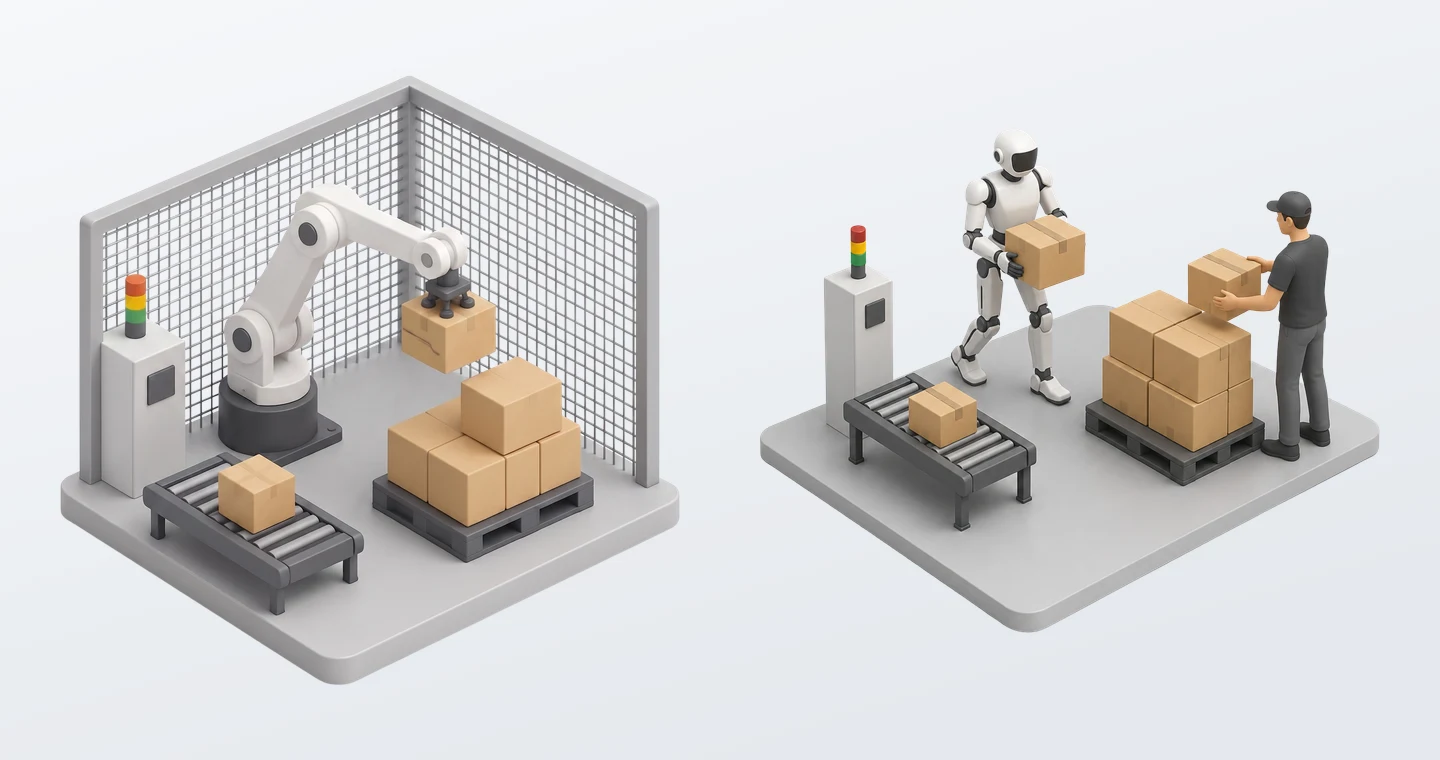
On a robot arm, wear shows up in the parts it makes. On a humanoid, the AI corrects every small mechanical error in real time, so the machine looks fine until the day it fails. There are about thirty joints under the shell, each with a motor, a gearbox and a bearing, and none of them can be seen from outside.
What we measure
What the pass does
The pass takes fifteen minutes and follows the same script every time. The robot reaches for a reference handle, presses a calibrated force point and reads printed targets. Part of the pass runs with the AI correction switched off, because with the correction on the humanoid hides its wear, and with it off the wear shows. Every pass is stored under the robot's serial number, together with the software version of that day.
What I do
I own the metrology and the test protocols, which means deciding what gets measured, against which reference, and what counts as out of spec. I also design the station itself, the cell, the fixtures, the targets and the sequence the robot runs. My co-founder is an engineering student at ETH Zurich.
Where it stands
Development is paused as of September 2026. The project was at the first-prototype development stage in Zurich. It grew out of REMVAL, our earlier venture on condition reports for used industrial robots.