Prototyping a self-service 3D printer for repair parts
A self-service machine for supermarkets and a marketplace of printable repair parts, starting from a modified 3D printer.
The idea
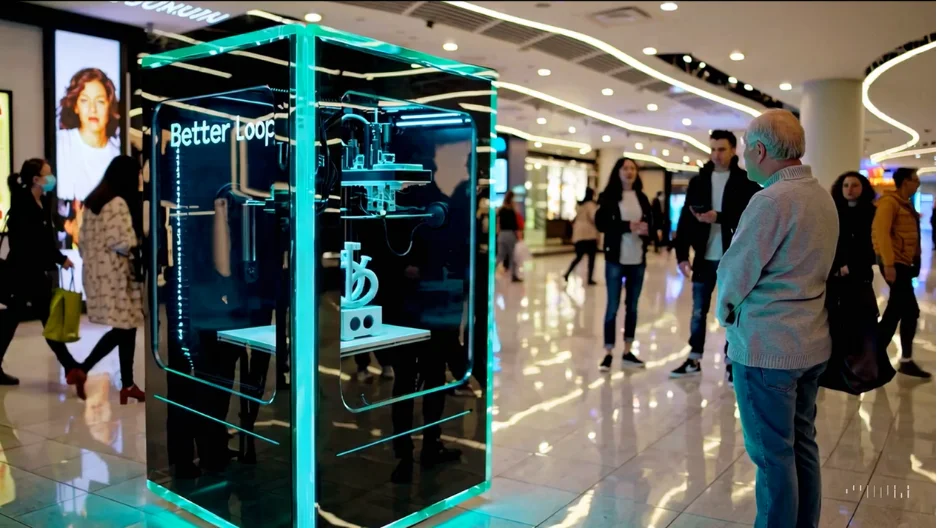
A machine in the place where you already shop. It prints the part that just broke, a knob, a hinge, a clip or a filter, out of recycled plastic while you finish the groceries. There is no freight, no warehouse and no packaging, because the part is made a hundred metres from the person who needs it. Repair parts were the starting point, but the same machine prints interior pieces and toys.
The machine
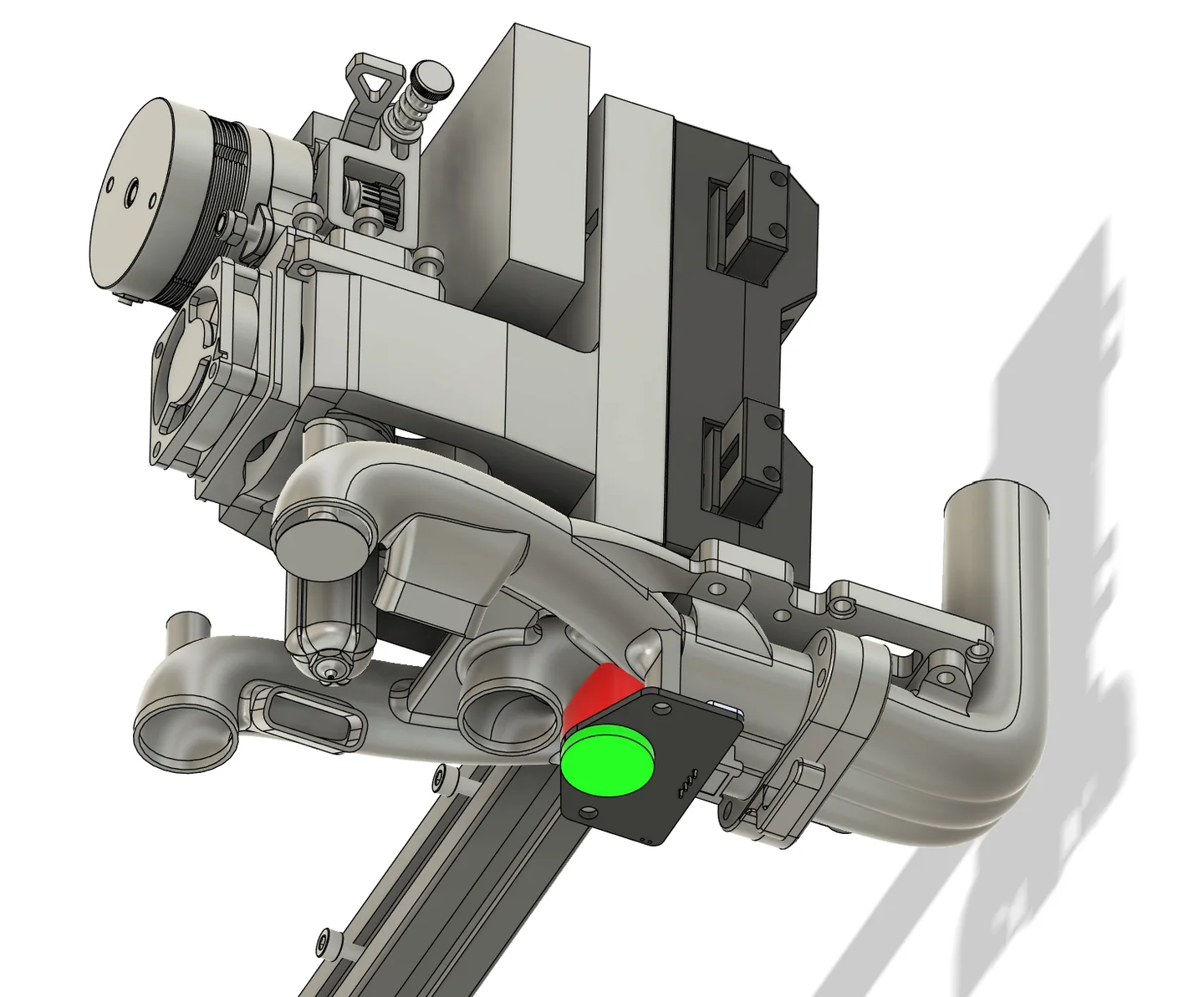
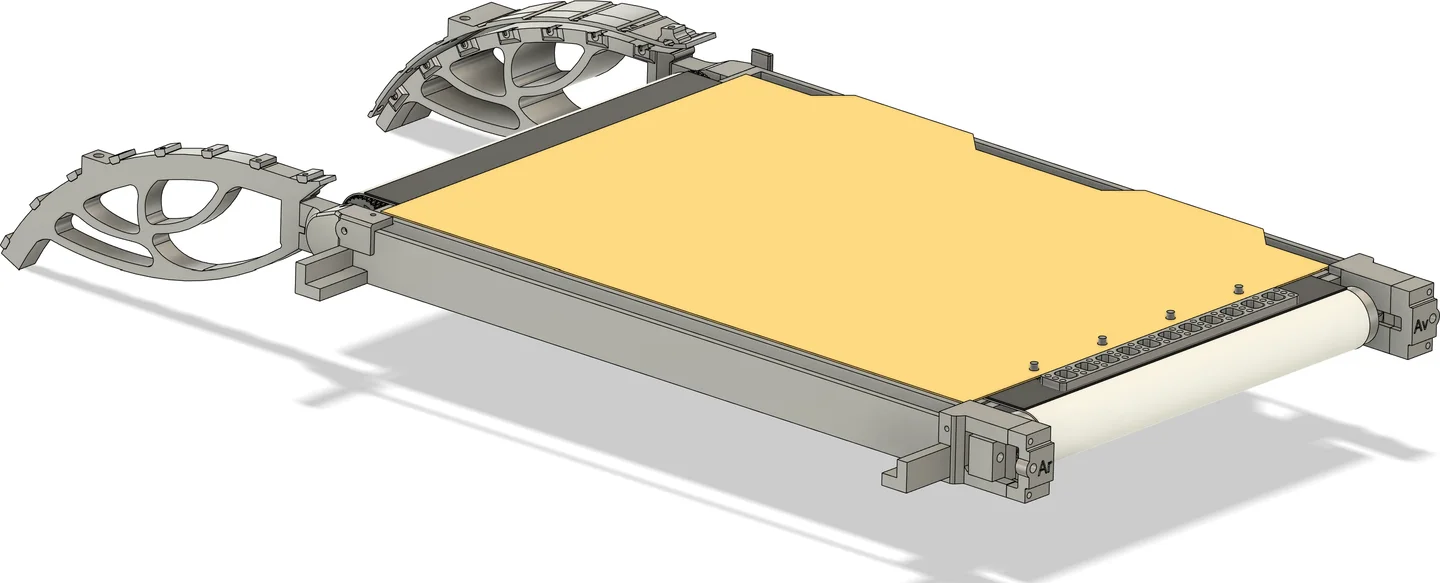
I started from a Peopoly Magneto X, an FDM printer that already runs on linear rails, and modelled what an unattended machine in a public space still needed. That meant two modifications, both drawn in Fusion 360, and they did not get equally far. The tool changer stayed a model. Every part was designed, but I never got to the electronics and the wiring, so it never changed a tool. The part ejection went all the way. I printed the parts, fitted the motor and wired it, and at the end of a job it pushed the finished part off the plate by itself. Speed was the problem I did not solve. A shopper in a mall will not wait around for a print to finish.
The tool changer, modelled but never wired
The ejection system, printed, motorised and working
The marketplace
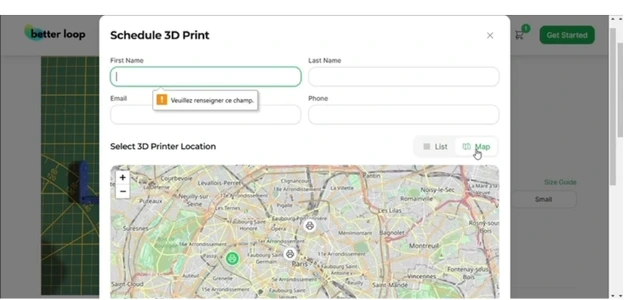
Behind the machine there was a site. You search for your appliance, find the part, check its size, then choose which printer runs it and when. Tutorials sat next to the parts, because nobody buys a part they cannot fit themselves. The site was built and working, but I never opened it to the public.
Search by appliance, not by part number
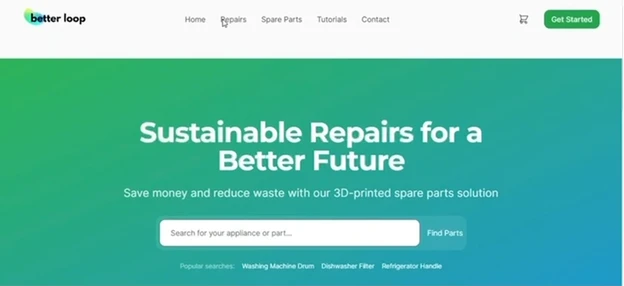
Then pick which machine prints it
Why it stopped
The engineering did not stop it. I wrote the full business plan, and every version of it said the same thing. This is hardware, every machine has to be paid for before it earns anything, and that capex would have been mine to fund. It was too much money for the risk. So I stopped there. The CAD, the working ejection system and the business plan are all on file, and I am not taking it further.