Three ventures in three months at Swiss Founders Fund Studio, all three closed
Three months in the studio's inaugural cohort, three ventures, and three problems validated with real buyers. All three are closed, and I can give the reason for each one.
Three months, three ventures
I was in the inaugural cohort of Swiss Founders Fund Studio in Zurich, picked from more than 500 applications. The format gives you three months to find a problem, prove it with real buyers and show traction, or stop. I ran three ventures in that time. All three problems were real and I validated them in the field. All three ventures are now closed, each for a reason I can name.
Pullfacto
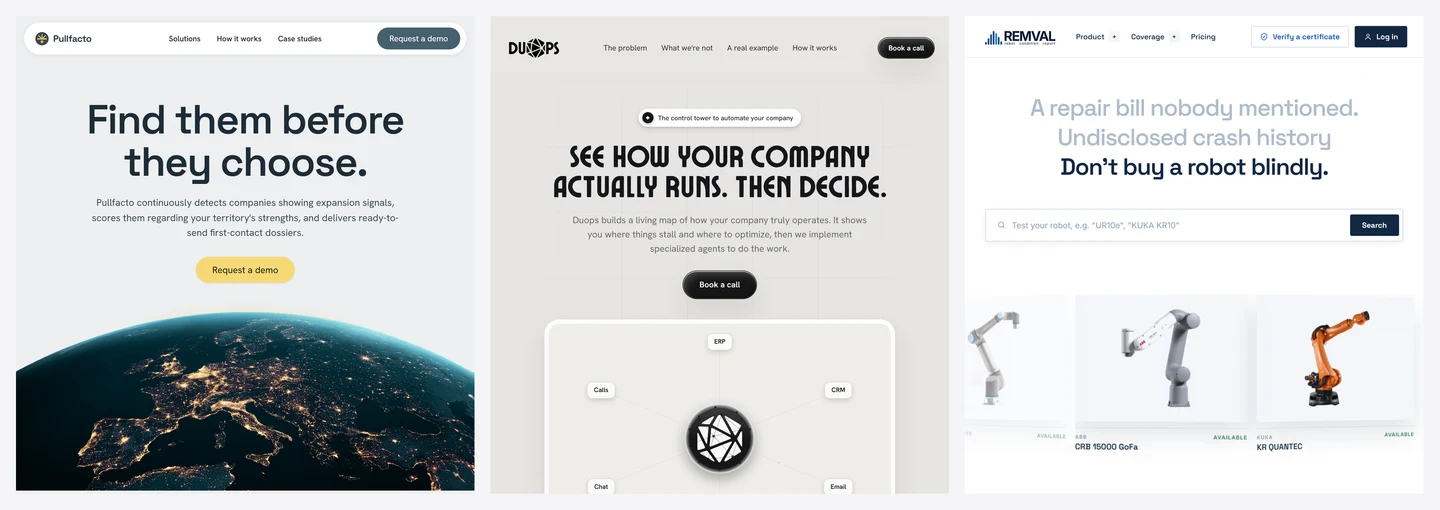
Pullfacto was an AI copilot for investment promotion agencies. It reads expansion signals in job postings and public data, scores each company against the strengths of the territory, and drafts the first approach. Prospection officers told me they spend most of their week on exactly that research. It closed on market size. There are too few investment promotion agencies to support a venture-scale company.
The promise, in one line
REMVAL
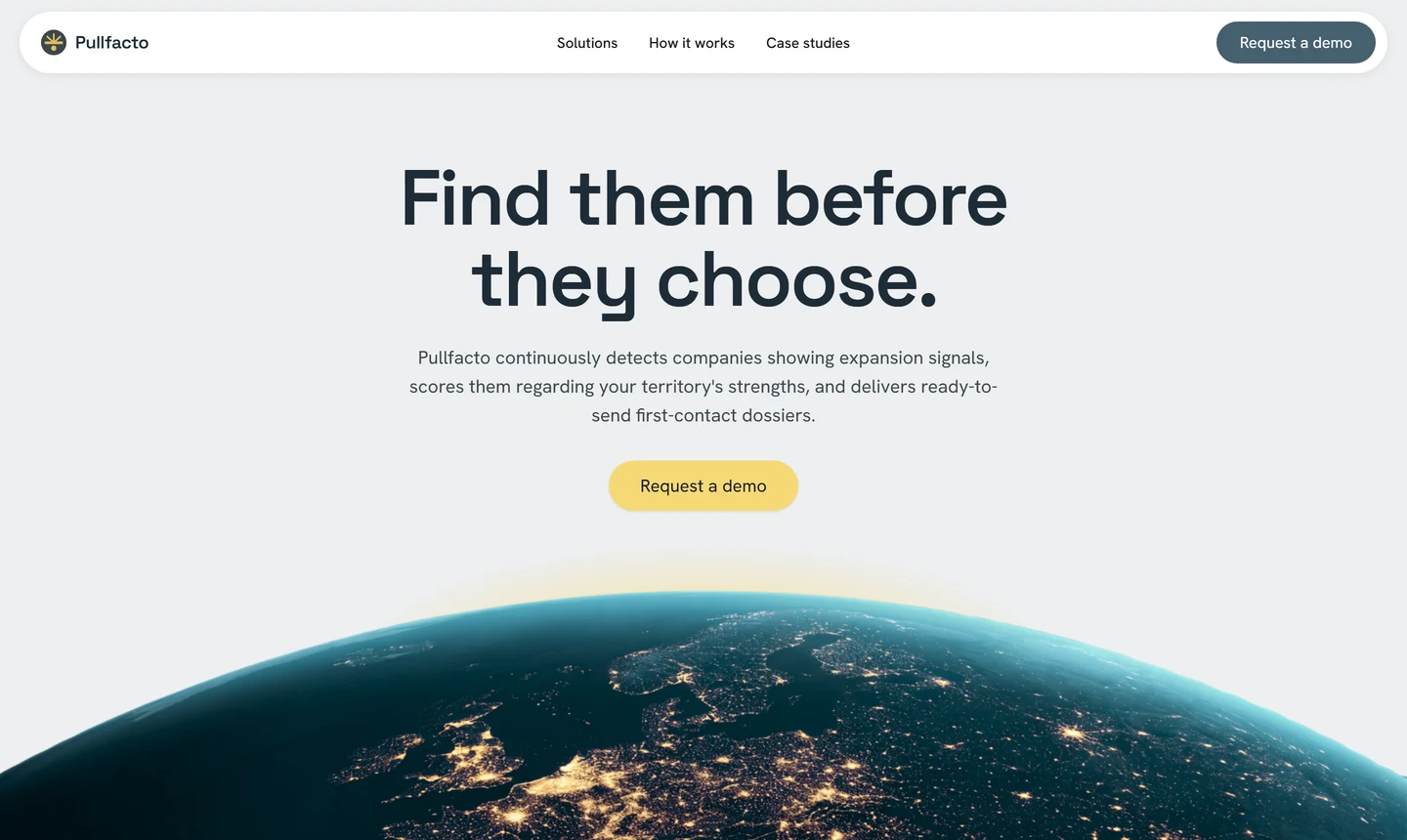
Used industrial robots are sold on photos and the seller's word. The expensive failure is the one you cannot see. Reducer wear costs thousands to repair and does not show in a power-on demo. REMVAL was a standardised, signed condition report, read from the robot's controller on site. I built the site and confirmed the problem with both buyers and sellers. It closed on the market analysis. The second-hand robot arm market is small, and the willingness to pay per report was too low for that market size. The work was not lost. AIH Global, my own venture outside the studio and now paused, came directly out of it.
The failures a demo does not show
Duops
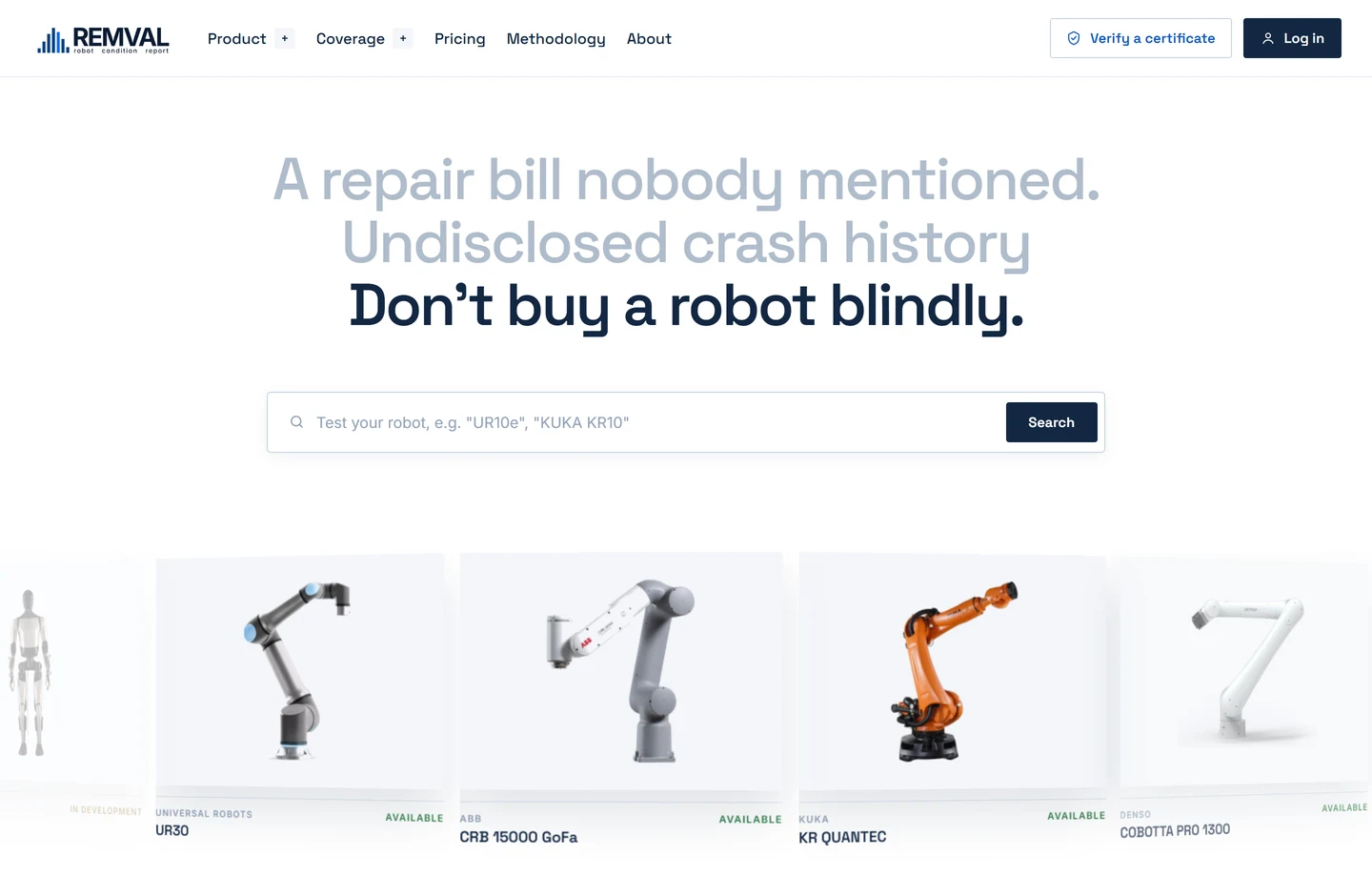
Companies rarely fail to automate because they lack tools. They fail because nobody knows where the time goes. Duops connected read-only to the ERP and the other tools already in place, then an agent interviewed the teams to capture what was never written down, like the workaround that keeps orders moving or the real lead time behind the official one. The output was one map of how the company runs, with the official process next to the real one. From that map, leadership picks what to automate first, and we build the agents that do the work. It closed on go-to-market. Duops needs a company big enough to run an ERP, and those ERPs, SAP and the others, do not give third parties access. Each connector is a large build before anything is proven. Winning a pilot inside a company that size, with no prior network and no track record, takes far longer than three months.
Read-only first, agents after
What it taught me
The fastest way to learn a market is to try to sell into it. Two of the three ventures had a real problem with a market too small underneath it. The third had customers I could not reach in the time I had. I only learned that by putting a price and a pilot proposal in front of real buyers. No amount of desk research would have told me.